Manager: Explain this before you begin. Today we will look at every handbook section and talk about the main points. We will not read the full handbook aloud during this meeting. These guides do not replace the policies. You are responsible for reading the complete handbook, asking about anything you do not understand, and following all of its rules, including details we do not discuss today. We will add our website to your phone’s home screen together so you can open the handbook whenever you need it. The handbook is also available on the tablet at the employee meal counter. Use the search box at the top of the handbook to find a policy, topic, or word quickly.
Ask the employee
What are you responsible for reading and following after today’s discussion?
Where can you look up a rule later, and what will you do if it is still unclear?
We are committed to a respectful, inclusive, and fair workplace. Our
policies outline workplace expectations, non-discrimination, harassment
prevention, and your rights as an employee. Employment is at-will, and we
encourage open communication to address any concerns.
The company name is Aldridge, Inc., a George Webb franchisee. We operate
the following George Webb restaurants.
812 N Dr MLK St, Milwaukee
4555 Douglas Ave, Racine
6181 S Howell Ave, Milwaukee
Our corporate staff is:
Tom Aldridge, owner and president
Melissa Medek, business manager
Lissette Lafontaine, administrative assistant
Dave Aleman, Maintenance Manager
Aldridge, Inc.
Workplace Policies and Standards of Conduct
State
The next 15 numbered policies are the core workplace standards every employee must know and follow on every shift. Review the main points together, explain that the full handbook must be read, and invite questions. What Customers See is part of #8 Shift Expectations.
Briefly review the section at left
Then ask
What should you do if a policy is unclear?
Do these rules still apply when the restaurant is slow or a manager is not beside you?
The next 15 numbered policies explain the core workplace
standards every employee must know and follow. They cover communicating
with your manager, schedules and attendance, arriving ready for work,
uniforms and appearance, shift duties, honesty, breaks, professional
conduct, and handling tips. These standards help us serve customers well,
work safely, and treat one another fairly.
Your manager will review the main points with you during orientation.
You are responsible for reading and understanding each policy, asking
questions when something is unclear, and following the rules on every
shift. The orientation discussion does not replace the complete policies
or the other requirements in this handbook.
As you review these policies, think about what customers see:
your appearance, your attention, and how you work and treat people.
Customers should see employees who are ready to serve throughout the
shift, even when business is slow. What Customers See in
#8 Shift Expectations
brings these expectations together.
Aldridge, Inc.
#1 Communications with Manager
State
Keep the manager and restaurant numbers available. Add our website to your phone’s home screen so the handbook is easy to find. Speak to the manager promptly about schedule or work issues; call for an urgent issue when texts may be silenced.
Briefly review the section at left
Then ask
Can we save the manager and restaurant numbers and add our website to your home screen now?
If an urgent problem occurs at night, how will you reach the manager?
Communicate
directly with your manager regarding schedules, shifts, or any issues.
Use text, phone, or in-person discussions to provide prompt and accurate
updates. Your manager oversees many employees. You are responsible for
managing yourself. Failing to communicate disrupts operations and
impacts the entire team. Your diligence is essential - stay responsible
and keep us informed.
Phone Contacts Entry
Let's create a phone contact entry entitled "George Webb". Add the
following phone numbers to it. (For Labels, choose "custom"
and type these names):
Manager (phone)
Restaurant (phone)
Corporate (414) 271-5050
Do Not Disturb Time
To respect personal time, managers set their text
notifications to silent at night. If you need to communicate
urgently during this time, please call, as phone calls are not silenced.
Android: Tap the three-dot menu
in the upper-right corner and select "Add to Home
Screen".
iPhone: Tap the share icon
(a box with an up arrow), scroll down, and select "Add
to Home Screen". Then, follow the prompts to save the
shortcut.
Contact Form
If you have questions or concerns, start by discussing them with your
manager. If your concerns remain unresolved after that conversation, you
can submit a contact form at www.aldridgeinc.com.
#2 Schedules
State
Schedules and days off can change. Check each posted schedule, use the time-off request process, and tell the manager if your availability changes.
Briefly review the section at left
Then ask
Where will you check your next shifts?
How will you request a specific day off?
Aldridge Inc. operates 24 hours a day, 7 days a week,
including weekends and holidays. Employees are hired based on
the days and shifts we need covered. You are expected to remain
available for the schedule you were hired to work.
Schedules are based on business needs and are not guaranteed
to be fixed or "set." Days off, start and ending times, and
the number of scheduled days may vary.
Shifts and Availability
We operate three shifts:
1st Shift: 6:00 AM - 2:00 PM
2nd Shift: 2:00 PM - 10:00 PM
3rd Shift: 10:00 PM - 6:00 AM
Full-time employment is preferred and generally
consists of 4-5 workdays per week.
Part-time schedules may be considered when they meet our staffing
needs and normally require at least three workdays per week,
including:
1st Shift: Saturday and Sunday plus at least one
weekday.
2nd Shift: Saturday and Sunday plus at least one
weekday.
3rd Shift: Friday and Saturday nights plus at
least one additional overnight shift.
Weekend and holiday availability is an important part of restaurant
employment. Employees may occasionally be scheduled an additional day to
cover vacations, call-offs, or other staffing needs.
Some shifts may be shorter than eight hours when business needs allow.
Shorter shifts are not guaranteed.
Overtime is paid at time-and-a-half for hours worked over 40 in a
workweek.
Time-Off Requests
Time-off requests for schedules that have not yet been posted must be
submitted online at www.aldridgeinc.com
with the requested dates and a reason. A request is not
automatically approved and should not be considered
approved until management confirms it.
The request system identifies one or two consecutive days
off as a Schedule Request. A request for
three or more consecutive days away from your normal
availability is identified as a Vacation Request,
even when the dates cross from one Monday-Sunday schedule week into
another.
Vacation Requests should be submitted at least 30 days in
advance and are subject to the Vacation Policy here.
Checking Your Schedule
Schedules are posted at www.aldridgeinc.com,
and employees receive a text notification when a new schedule is
available. Employees are responsible for checking their schedule and
reporting on time for every scheduled shift.
Changes to Your Availability
If you want to change your shift, store, number of workdays, regular
days off, start or ending time, or other availability, discuss the
request with your manager first.
Changes depend on staffing needs, weekend and holiday coverage,
required skills, attendance, and performance. Approval is not
guaranteed and may have to wait until adequate coverage is available.
Your manager will determine whether a Payroll Transfer Request is
required.
Aldridge, Inc.
#3 Arrival, Clock-In, Departure, Clock-Out, and Timekeeping Integrity
State
Arrive ready to make the shift change smooth. Clock in with your own POS number, work while on the clock, and record every hour actually worked.
Briefly review the section at left
Then ask
If the next employee is late when your shift ends, what should you do?
May another employee clock in for you?
Employees must clock in and out properly, only for actual work time.
Get manager approval before staying past a scheduled shift. Record all
time actually worked, including extra time. Unauthorized extra time
may result in corrective action. Clock out when no longer working.
Arrival and Clock-In
Employees should arrive 10 minutes before their scheduled
shift and clock in using their assigned POS number to
ensure a smooth transition.
If arriving earlier than 10 minutes before the shift, wait
until the appropriate time to clock in.
Employees should not enter the workplace more than 30
minutes before their scheduled shift. If early, they may
use the designated break area or visit as a paying customer.
Off-duty employees should not assist with work, linger
unnecessarily, or disrupt operations.
Departure and Clock-Out
Employees should clock out no later than 10 minutes after
their shift ends, ensuring the workplace is clean, organized,
and fully stocked for the next shift. Employees must clock out when no
longer actively working.
Teamwork is essential - all shift duties should
be completed, and no employee should leave before the rest of the
team.
If the shift is exceptionally busy, staying beyond 10
minutes is allowed to complete necessary tasks.
If the next shift's employee is late, you must stay until
they arrive or until a manager grants permission to
leave.
Timekeeping Integrity
Employees are required to record time accurately and may be paid only
for time actually worked.
Time card theft or falsification is prohibited.
This includes being clocked in while not actively working,
excessive personal phone use or cyberloafing during paid time,
taking extended or unauthorized breaks without clocking out, having
another employee clock in or out for you, or remaining clocked in
before or after a shift without performing work.
Employees must be actively engaged in work duties while on
the clock unless on an approved break.
Violations may result in correction of recorded time to reflect
actual hours worked, disciplinary action, or termination of
employment.
Aldridge, Inc.
#4 Parking
Briefly review the section at left
Employees must park in designated employee areas to keep spaces
available for customers. Parking locations for each restaurant are
assigned as follows and must be followed.
Douglas Ave: The back parking area. Do not park in
customer parking.
Howell Ave: The middle area of the back parking lot. Do not
park in customer parking.
Third St: There are special considerations, click
here.
#5 Attendance Policy
State
Be on time for every scheduled shift. Tell the manager at least two hours before an absence; if late, call or text immediately with an estimated arrival time.
Briefly review the section at left
Then ask
If you cannot work tomorrow morning, when and how will you notify the manager?
If traffic makes you late, what information will you provide?
Regular attendance and punctuality
are fundamental job requirements. Every employee is expected to be
present and ready to work at the beginning of every scheduled shift.
Attendance issues disrupt operations, burden coworkers, and negatively
impact business. Therefore, your commitment to showing up as scheduled
is critical to maintaining a functional workplace. Excessive absences,
tardiness, or leaving early will not be tolerated and may result in
disciplinary action, including termination if necessary.
George Webb Restaurants maintains a no-fault attendance policy,
in which points are assigned for absences, tardiness, or going home
early, based on time missed - not the reason why. This ensures fairness
and consistency for everyone and avoids putting managers in the position
of judging which reasons are "good enough".
If you cannot attend, will be late, or need to leave early, you must
notify your manager as follows with a valid reason.
Punctuality
Being on time means being ready to begin working at your
scheduled starting time, not arriving at the restaurant at
that time. Employees are expected to plan transportation and personal
obligations so they can consistently report to work on time. Frequent or
habitual tardiness is unacceptable, even when individual late arrivals
result in few or no attendance points. The point system tracks
attendance occurrences; it does not create permission to be late. A
pattern of tardiness may result in corrective action.
Absences
Notification Requirement: Notify your manager at
least two hours before your scheduled shift.
Explanation: Provide a plausible reason for your
absence. Documentation may be required upon request.
Arriving Late (or Leaving Early)
Arriving Late: Notify your manager immediately by
call or text with your estimated time of arrival (ETA).
Leaving Early: Obtain verbal permission directly
from your manager before leaving early. Permission to leave
early does not remove attendance points; it ensures communication
and coverage under the no-fault system.
Point System for Attendance Tracking
We track attendance to ensure fairness and accountability. Points are
based on the amount of work time missed, not the reason for the absence,
tardiness, or early departure. Points are assigned as follows:
Absence:
Reported at least 2 hours before the shift: 2 points
Reported less than 2 hours before the shift: 4 points
Double Points: If not reported by work time
or an implausible reason is provided.
Late:
Occasional late arrival under 10 minutes: No points.
Repeated tardiness under 10 minutes may be addressed as a
pattern of poor punctuality.
Double Points: If no call or text is made to
the manager with an ETA.
Leaving Early:
Points mirror the tardiness scale above.
Double Points: If no permission is obtained
before leaving.
Excused Absences and Doctor's Notes
George Webb Restaurants does not generally classify attendance
occurrences as "excused" or "unexcused." Points are based on work time
missed, regardless of the reason or whether a doctor's note is provided.
A doctor's note may document the reason for an absence but does not
automatically remove attendance points. Attendance protected by FMLA or
other applicable law will be handled as required by law.
Discipline for Attendance Violations
Warnings: A warning is typically issued when attendance points reach 3, 6, 9 or 12. This is not a guarantee that every occurrence will receive a warning before discharge.
Discharge: Once the 12-point threshold is reached, discharge may occur without another warning. A serious occurrence, such as a no-call/no-show, may result in immediate discharge regardless of the point total or prior warnings.
Point Reduction: Two points will be removed for
every month of perfect attendance until your record is cleared. Points track attendance occurrences. Monthly reductions recognize improvement; the discharge provisions above also apply.
No Call / No Show Policy
Do not assume it is acceptable to miss a shift without contacting
management. Excuses such as "I overslept", "I lost my phone", "my phone
battery died", "my phone was shut off", or "I did not have the manager's
phone number" are not acceptable. Employees are provided with restaurant
and management contact information during orientation and are expected
to keep that information available. If you do not have a working phone,
borrow one, search online for the restaurant's phone number, use the
company contact form at https://www.aldridgeinc.com,
or use WiFi or internet access to contact management through a free
calling or messaging service such as Google Voice, TextNow, or WhatsApp.
Finding a way to make contact and report to work is your responsibility.
Staying home without reaching out is not an option. If you are scheduled
to work, you must show up. Failure to report for a scheduled shift
without notifying management in advance may result in immediate
termination, regardless of prior warnings or disciplinary history.
Aldridge, Inc.
#6 Uniforms and Shoes
State
Wear the complete uniform throughout work: red polo, black apron, forward-facing George Webb visor or hat, name tag, approved black pants, and required black shoes. A hoodie or raised hood does not replace any item.
Briefly review the section at left
Then ask
Name the uniform items you need for your first shift.
If you arrive without your visor or apron, what will you do?
Wearing the proper uniform is crucial to maintaining a professional,
polished appearance that reflects our restaurant's standards. Adhering
to the uniform policy is mandatory.
Required Uniform Items
Wear every required item while working, including the black apron and
George Webb visor or hat. A shirt alone is not the complete uniform.
George Webb red polo shirt
George Webb black apron
George Webb visor or optional GW baseball hat
Black slacks or black jeans (no blue jeans,
ripped jeans, sweats, or sports pants)
Name tag.
Prohibited Items
No Street Clothes: No blue jeans, ripped jeans,
sweats, sports pants, or other non-uniform items
Outerwear While Working: Only George Webb branded outerwear may be worn during a shift, and only in cold weather. Other hoodies, sweatshirts and jackets are not permitted over or under the red uniform polo while working. Keep the hood down at all times. Outerwear does not replace any required uniform item, including the George Webb visor or baseball hat.
No Durags or Non-Uniform Head Coverings: Durags
and other non-uniform head coverings are not permitted while
working. Wear the required George Webb visor or baseball hat.
Pants: Pant legs must be hemmed and should not
drag on the floor. Male employees must wear pants pulled up around
the waist and use a belt. No Low-Hanging Pants: We don't want to
see your underwear.
No Earbuds: The use of earbuds or headphones for
any purpose - music, videos, or calls - is strictly prohibited
during work hours
No Backwards-Facing Hats: Visors or hats must
always be worn facing forward, per state health code.
First Uniform
Upon hire, your first uniform will include one apron, one shirt, and
one visor, valued at $37.00 (or $45.00 with an optional baseball cap).
The cost will be deducted from your paycheck at $1.00 per hour, starting
after training. If your employment ends before the full amount is
deducted, the remaining cost will be taken from your final paycheck,
regardless of training completion.
Additional Uniforms
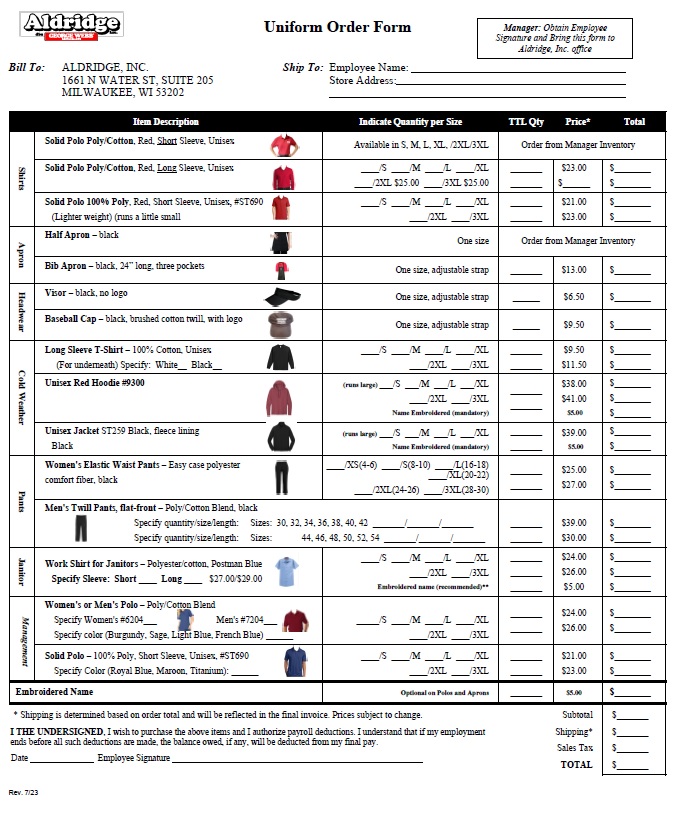
As you continue the job,
you will want to purchase additional uniform items. These are available
at your expense and can be conveniently paid for through paycheck
deductions at a rate of $1.00 per hour. A variety of options are
available which you can see by clicking on the image of the order form
presented here. Also, on the form are some George Webb branded outerwear
items (jacket, hoodie, and long-sleeve t-shirt). These George Webb branded items may be worn during a shift only in cold weather, with the hood kept down. All required uniform items must still be worn. Also available are George Webb branded t-shirts click here.
Uniform Allowance
We help offset the cost of additional uniform items by providing a
uniform allowance of $0.10 per hour worked. This allowance is tracked in
your uniform account. The allowance may be used only for uniform items
provided by your manager or ordered from the Gloria Kay uniform order
sheet. It may not be used toward the cost of shoes or to purchase George
Webb T-shirts. For details or to check your account balance, please see
your manager.
Come to work clean and ready for food service. Keep hair and nails within the stated standards, and follow the uniform rules for headwear, hoodies, jewelry, and earbuds.
Briefly review the section at left
Then ask
How should you prepare your hair and uniform before work?
Can you pull up a hoodie instead of wearing the George Webb visor?
Maintaining a clean, professional appearance is crucial to providing a
positive customer experience and adhering to health and safety
standards. Customers see our appearance as part of the service we
provide. Employees must follow these guidelines:
Hair: For females, long hair must
be pulled back and kept under control. Bonnets are not permitted.
Hair color should remain natural-looking if tinted. For males,
hair should be trimmed or cut to collar length. Head coverings
must follow the Uniforms policy. Facial hair must be clean-shaven
or, if a beard is worn, neatly trimmed. Beard nets are not permitted.
Fingernails: In compliance with state
food codes, restaurant workers cannot wear nail polish or artificial
nails. Special exceptions may be made for occasional events but not
regularly.
Hygiene: To avoid odor, employees must
wear a freshly washed uniform to each shift, bathe regularly, and
use deodorant.
Tattoos: Tattoos are subject to
management approval on a case-by-case basis and may need to be
covered.
Piercings: Facial and tongue piercings
must be removed during shifts.
Jewelry: For females, earrings
must not exceed 1 inch in length or diameter, with no more than two
per ear. A small nose stud is acceptable, but no other facial
jewelry is permitted. Males may not wear earrings or facial
jewelry. Both genders are limited to one ring, and necklaces
or chains must be tucked under the shirt. Chains on pant loops,
pins, and other accessories are not allowed.
Pants: Pant legs must be hemmed and should not
drag on the floor. Male employees must wear pants pulled up around
the waist and use a belt. No low-hanging pants, we don't want to
see your underwear!
Hoodies and Headwear: Hoodies may not be worn
over or under the uniform top while working. Do not pull a hood over
your head while working. Wear the required George Webb visor or
baseball hat facing forward.
No Backwards-Facing Hats: Visors or hats must
always be worn facing forward, per state health code.
Prohibited Items:
Earbuds: The use of earbuds or headphones for
any purpose - music, videos, or phone calls - is strictly
prohibited during work hours.
Gum Chewing: Gum chewing is not allowed
while on duty.
Pins of any kind: On uniform, including the
visor or hat, unless authorized by the company.
Aldridge, Inc.
#8 Shift Expectations
State
Serve customers promptly and remain engaged throughout the shift. When business slows, clean, stock, and complete the shift duties for your position.
Briefly review the section at left
Then ask
What should you do when there are no customers at the counter?
How do you leave your station for the next shift?
Know the schedule and who is expected to work with you. At the start of every shift, employees are responsible for confirming that all scheduled coworkers are present. If anyone is missing, you must immediately notify the manager at the beginning of the shift. Do not wait. This responsibility applies to all employees and helps ensure proper staffing, service, and safety.
Shift Readiness and Accountability
Employees are expected to uphold a high level of productivity and deliver exceptional customer service throughout their shift. Employees are also required to read, understand, and follow the essential functions and physical requirements of their primary position. The Server/Cook job description is available here.
Server/Cook Cross-Training
All restaurant employees are trained in both serving and cooking. Employees must become proficient in both positions and are expected to work either position as needed. Employees should continue working in both positions frequently enough to maintain their skills and provide proper coverage.
Fit for Duty Requirement
Upholding this standard requires employees to be fully alert, focused, and capable of performing their duties safely and effectively. Employees are strictly prohibited from reporting to work or remaining on duty while under the influence of alcohol, drugs, or any controlled substances, including marijuana.
Shift Performance Expectations
The following guidelines outline key expectations:
Begin work promptly upon clocking in, staying focused and ready to contribute.
Provide customers with prompt, attentive, and courteous service at all times.
Process orders efficiently while maintaining the highest quality standards.
Stay actively engaged during your shift. Do not lean at the register or stand around when there are duties to complete.
Employees are expected to remain on their feet and working throughout the shift except during approved meal breaks, restroom use, or other manager-approved exceptions.
Sitting down while on duty, including in customer areas, at tables, or at the counter, is not permitted unless on an approved break or specifically approved as an accommodation.
Between customers and during slower periods, complete tasks outlined in the Server Shift Duties click here and Cook Shift Duties click here tablets.
Check off completed tasks and submit the tablet at the end of your shift.
Maintain a clean, organized, and well-stocked workspace to ensure the next shift starts smoothly and efficiently.
What Customers See
State
Customers see our uniform, attention, and conduct. A slow period is still work time: serve, clean, stock, and stay ready.
Briefly review the section at left
Then ask
What would a customer think if you stood at the counter using your phone?
If your apron or visor is missing, what do you do?
These expectations bring together the uniform, appearance, shift duty,
phone, and professional conduct rules explained in this handbook.
Customers notice how we look, act, and treat them. Even when the restaurant is slow, they should see employees who are ready to serve. Our appearance and attention help customers feel welcome and confident in the restaurant.
Look ready: Wear your complete, clean uniform throughout your shift, including the red polo, black apron, name tag, and forward-facing George Webb visor or hat. Wear the required black pants and black non-slip shoes. Only George Webb branded outerwear is permitted during a shift, and only in cold weather. Keep the hood down; do not wear a durag. Outerwear does not replace the required uniform.
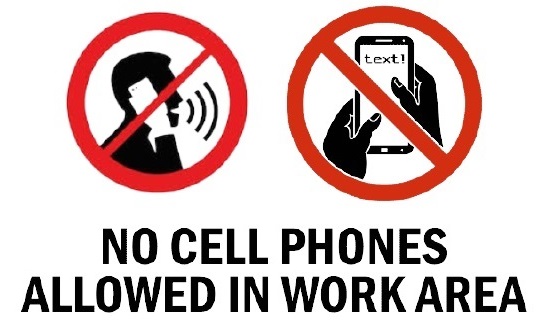
Pay attention: Keep your personal phone put away while working. Never stand at the register, counter, or another place customers can see you using your phone. Use it only on an approved break, out of customer view.
Stay engaged: Greet customers, listen, and speak courteously. When you are not serving a customer, clean, stock, or complete your shift duties. Do not sit, lean, or stand around waiting for work.
Ask early: If a uniform item is missing or you are unsure what to do next, tell your manager before the shift or as soon as the issue arises.
#9 Workplace Integrity Standards
#9 Workplace Integrity Standards
State
Ring it, THEN bring it: enter every item and addition before preparing or serving it. Follow the payment, void, refund, and reporting procedures.
Briefly review the section at left
Then ask
A customer asks for cheese after ordering. What happens before you serve it?
What should you do if you personally see an item served without being rung in?
This policy applies to all restaurant employees, including servers,
cooks, cashiers, and anyone who takes orders, handles customer payments,
or prepares employee meals. These standards protect you, the business,
and our customers. Following these rules is a condition of
working here.
Bottom line: Ring every sale correctly, every time, before
any food or drink is prepared or served. Do not participate in
violations, and promptly report integrity violations
when you see them. You may report a concern to the restaurant manager or
use Aldridge's confidential Integrity Concern Report.
9.1 The Rules You Must Follow Every Shift
The Most Important Rule: "Ring it, THEN bring it."
Every item must be entered into the POS system before it is
cooked, prepared, served, handed to a customer, or taken as an
employee meal. This applies to all food, beverages,
dine-in orders, carryout orders, and employee meals. There are no
exceptions for "small" items.
DO: Ring every item first, then prepare or serve
it.
DO NOT: Cook, pour, plate, package, or serve
anything that has not been rung in.
Employee meals: Ring your meal before preparing,
cooking, serving, or eating any part of it.
Carryout: Collect payment before preparation
begins.
Dine-in: Use the handheld at the table. Do not
write orders down to enter later.
Cash and cards: Never keep money outside the POS,
never alter tip amounts, and never run a card without permission.
Voids and refunds: Follow documentation rules and
obtain required approvals.
No giveaways: Do not give away food or drinks.
Only managers may approve discounts or free items, and they must be
rung in correctly.
Reporting violations: If you see ringing
violations or theft, promptly report what you personally observed
to the restaurant manager or use Aldridge's confidential
Integrity Concern Report. Do not participate
in, conceal, or ignore a violation.
Not following "Ring it, THEN bring it" is considered theft.
Violations are documented and may result in discipline up to and
including termination. In severe cases, criminal charges may apply.
9.2 What Counts as Theft (Examples)
The following actions are considered theft and will result in formal
documentation and, depending on severity and circumstances, removal
from the schedule, termination, and possibly police involvement:
Failing to ring up sales, even for a single item.
Preparing or serving items before they appear on
the POS/KDS system.
Taking food or drinks without paying and ringing
them up properly.
Taking anything from anyone without their
permission.
Pocketing customer payments instead of entering
them into the POS system.
Working with a coworker to bypass or cheat the
order process.
Mishandling employee meals, including preparing,
cooking, serving, or eating any part of an employee meal before it is
rung up.
Unauthorized giveaways, including "just a free
coffee" or "just some fries."
9.3 Procedures
1. Order Entry and Processing
DO: Enter every item into the POS system before
preparing or serving it.
DO NOT: Prepare or serve anything until it appears
on the POS/KDS system.
Employee meals must always be rung up before preparing, cooking,
serving, or eating any food for yourself.
2. Dine-In Orders
Using the handhelds while at the customer is
mandatory. Take the handheld device to the table.
Writing down the order or trying to remember it and entering it
later is not permitted.
If a customer adds an item, add it in the POS before
serving.
3. Carryout Orders
Carryout orders must be taken at the cashier station
or on a handheld device.
Payment must be collected BEFORE preparation begins.
4. Phone Orders
Phone orders up to $40 are accepted without
prepayment.
Orders over $40 require customers to pay online. Do
not take credit card numbers over the phone.
Politely explain: "For orders over $40, please come into the
restaurant to place your order, or place it online at "https://gwtogo.com/.
5. Voids and Refunds
Voids require documentation: a pink ticket plus a
coworker's signature or initials.
Refunds require manager approval.
6. Payment Handling
CASH: Count the money, say the total out loud, and
enter it correctly. Never keep any part of a customer
payment.
CREDIT CARDS: Never change tip amounts, never split
payments incorrectly, and never run a card without the customer's
permission.
9.4 Monitoring and Enforcement
We take workplace integrity seriously. Our restaurant is monitored by cameras
and microphones to ensure procedures are followed.
Management actively observes and documents employee
actions.
Excuses such as"I thought..." or "I
was going to..."are not acceptable.
Violations may be documented even if management issues a warning
instead of termination.
9.5 Reporting an Integrity Concern
If you observe theft, an item not being rung in, improper handling of
cash, food, employee meals, discounts, refunds, or other conduct that
may violate this policy, promptly report what you personally
observed. Do not investigate the matter yourself or confront
a coworker in front of customers.
You may report the concern in either of these ways:
The Integrity Concern Report allows you to provide your name and ask
that it be kept confidential, or to report anonymously. Reports are sent
directly to Aldridge, Inc. ownership and designated administrative
personnel and are not automatically sent to the restaurant manager.
Information will be handled confidentially to the extent reasonably
possible, although an investigation may sometimes reveal or suggest the
reporter's identity.
Retaliation for making a good-faith report is prohibited.
An employee who knowingly makes a false report is not protected by this
policy.
FINAL REMINDER
If you do not "Ring it, THEN bring it," you are subject to
discipline up to and including termination.
This is the most important procedure in the restaurant.
Learn it. Follow it. No exceptions.
Aldridge, Inc.
#10 Breaks, Meals, and Interruptions to Work
State
Breaks and employee meals have set times and places. Phones are used only on approved breaks out of customer view. Ring every part of an employee meal before preparation and take it during the designated meal break.
Briefly review the section at left
Then ask
When and where may you use your phone?
If cheese was not rung into your employee meal before preparation, what happens to the discount?
Breaks, meals, phones, smoking, bathroom trips, and beverages are all
interruptions to work. They must be handled without slowing service,
creating sanitation problems, or leaving coworkers uncovered.
Basic Rule
Employees are expected to remain productive, stay alert, and be
ready to serve customers.
No sitting or standing around in booths, tables, counter seats,
customer areas, work areas, the backroom, or any chairs unless you
are on an approved meal break in the employee meal area.
Do not leave your station unless customer service is covered and
your coworkers know you are stepping away.
After any break, bathroom trip, phone use, smoking, eating, or
drinking, wash your hands as required before returning to work.
Cell Phone Use
Phone calls, texting, web surfing, videos, apps, and similar phone
use are interruptions to work.
Phones may only be used during approved breaks, out of customer
view.
Phones must stay in your pocket during work hours - not on
counters, workspaces, or in the kitchen.
Wash your hands before returning to work after phone use.
Smoking
Smoking is allowed only during your 30-minute meal break. No
additional smoke breaks are allowed.
Smoking is allowed only in the designated outside area for your
restaurant:
Dr MLK St: To the left or right of the
restaurant, not directly in front.
Douglas Ave: Outside the rear service door near
the smoker's station.
Howell Ave: Outside the rear customer door near
the smoker's station.
Wash your hands before returning to work after smoking.
Stay Inside the Building
Employees must remain inside the building during their shift. The only
exception is during the scheduled meal break, when you may leave the
premises if you choose.
Bathroom Breaks
Bathroom use is an interruption to work and should occur only when
customer service is covered.
Tell your coworkers before stepping away.
Wash your hands in the restroom and again at the handwashing sink
in the work area before returning to work.
Beverage
Breaks
Beverage breaks are interruptions to work and must be limited.
Beverages may only be consumed in the designated employee break
area - not in the kitchen, on the floor, or in customer areas.
Free coffee and fountain soda are permitted during breaks.
Premium beverages, including milk, juice, Sprecher sodas,
lemonade, hot chocolate, and cappuccino, are not free employee
beverages.
Wash your hands before returning to work after drinking.
Meal Breaks
A full 30-minute meal break is preferred when business conditions permit. For employees age 18 or older, the manager may approve shortening or omitting the full break when sales and the number of employees working do not permit adequate coverage.
An unpaid meal break must provide at least 30 consecutive minutes free from all work duties, and the employee must be allowed to leave the premises. Clock out only for a qualifying unpaid meal period and clock back in when work resumes.
When business conditions prevent a full break, an employee who needs to eat may take a short paid meal break outside the formal meal-break window. Coordinate coverage with the manager and coworkers. Eat in the designated employee break area, never out front, in workstations or while serving customers.
A meal break shorter than 30 consecutive minutes is paid. Record all time actually worked; do not deduct a meal period that was omitted or shortened. Obtain manager approval before omitting or shortening a break, and submit an Extra Time Worked Report before leaving the shift. Failure to follow the approval or report procedure may result in corrective action. Missing approval or a report does not justify leaving actual work time unpaid.
Employees under age 18 must receive a 30-minute duty-free meal period for every six consecutive work hours. The shortened or omitted break arrangement for adults does not replace this requirement.
If you remain in the restaurant during a meal break, eat in the designated employee meal area, not customer seating, workstations, the kitchen or the restaurant floor.
Employee Meals Ordering and Preparation
Discounted employee meals are a workplace privilege. They are provided
for your scheduled meal break or a manager-approved adjusted meal time, including the short paid meal break described above, and are subject to all Workplace
Integrity Standards, including the "Ring It, Then Bring It"
policy.
Permitted
One employee meal per shift at a 50% discount.
The 50% employee meal discount applies to one meal ordered for and eaten during the designated meal-break window or a manager-approved adjusted meal time, including a short paid meal break when business prevents a full break.
If business prevents a full meal break, follow the short paid meal-break procedure above. Eat in the designated employee meal area, never while running around, serving customers or working at a workstation.
Not Permitted
Eating mistakes, leftovers, or unclaimed orders is strictly
prohibited. These items must be discarded.
Employee meals, or any portion of an employee meal, may not be
saved, replaced, carried over, or claimed during a later shift. The
meal is valid only on the day it is ordered.
Take-home food or beverages must be purchased at full price and
must be rung up and prepared by a coworker. Self-service is
prohibited.
Off-menu or improvised meals are not allowed. Employees may not
combine items, repurpose ingredients, or create food that is not
offered on the menu.
Procedures
Ring It, Then Bring It: No employee food may be
prepared or handled unless it has first been rung into the POS.
Loss of Discount: Every item and ingredient,
including additions such as cheese, must be rung into the POS before
the meal is prepared. If any part of the meal is not properly rung
in, the employee forfeits the 50% employee meal discount and must
pay the full menu price for the entire meal.
Meal-Break Discount: Use the discount only for the designated meal-break window or a manager-approved adjusted meal time, including an approved short paid meal break. If an employee orders, prepares or eats a discounted meal outside those approved times, the discount is forfeited and the entire meal is full price.
Ring It Before Break: Place the meal order into the POS immediately before the scheduled or manager-approved adjusted meal break, before any preparation or eating.
Preparation: Cooks may prepare their own meals.
Servers must have their meals prepared by a cook. Self-preparation
by servers is prohibited.
Serving: Employee meals must be served on
washable dishes, not in carryout containers.
Paying: Pay for your meal before the end of your
shift.
Abuse of the employee meal policy is considered a violation of
Workplace Integrity Standards and may result in disciplinary action,
up to and including termination.
Aldridge, Inc.
#11 Workplace Visitation Policy
State
Friends and off-duty employees may visit as customers, but visits must not distract working employees or turn into loitering.
Briefly review the section at left
Then ask
If a friend comes in while you are working and wants to talk at length, what will you do?
While our restaurants are open to the public, they are not a place for
personal socializing. To maintain a professional and efficient work
environment, visits by employees, friends, or family must be limited and
appropriate.
Off-Duty Employee Visits (Including Friends or Romantic Partners)
Employees who visit the restaurant while off duty - whether alone or to see a
friend, co-worker, or romantic partner - must behave strictly as customers.
No working, helping, or assisting staff.
No interrupting, distracting, or socializing with on-duty employees.
Order, pay, and leave within a reasonable dining time.
No loitering, hanging out, or remaining in the restaurant to spend time with an on-duty employee.
Repeated or extended visits during someone's shift are not permitted.
If an off-duty employee or visitor remains beyond a reasonable dining period,
management may ask them to leave.
On-Duty Employees
Personal visitors are not permitted during work hours.
Employees must not allow visitors to interfere with their duties.
If a friend or acquaintance visits as a customer, the visit must
be brief and professional.
Repeated or lengthy visits during a shift are not acceptable.
Shared Responsibility
Employees must ensure personal visitors do not linger or cause
distractions.
If a visit becomes disruptive, the employee must take steps to end
it.
Failure to do so may result in corrective action.
Aldridge, Inc.
#12 Your Relations with Others
State
Speak courteously with customers and coworkers. Handle problems through the manager or corporate office instead of arguing, gossiping, or discussing employee matters with customers.
Briefly review the section at left
Then ask
What would you say to a customer who is unhappy with an order?
Where would you take a concern about a coworker?
Maintaining positive and professional relationships with customers, coworkers, managers, vendors, and others connected to our business is part of every employee's job. Employees are expected to help create a respectful workplace and protect the reputation of the restaurant.
Behavior Toward Customers
Greet customers warmly, give them your attention, and use courteous language such as "How may I help you?", "Thank you", and "You're welcome."
Focus on solutions when problems arise. Avoid blame, excuses, arguing, or showing anger toward a customer.
Do not ask, pressure, or require customers to leave a tip. Tips are voluntary. Great service is what leads to great tips.
Do not discuss employee problems, workplace conflicts, personal complaints, rumors, or gossip with customers.
Do not make negative or personal comments to customers about another employee, manager, customer, or anyone connected to the business.
Behavior Toward Coworkers
Treat coworkers with respect, even when you disagree or do not personally get along.
Help maintain a cooperative workplace and avoid gossip, rumors, insults, or negative personal comments.
Do not discuss another employee's private matters or make derogatory remarks about a coworker, a coworker's family, or a coworker's personal life.
Do not initiate, provoke, or escalate conflicts with a coworker.
If you have a workplace concern, bring it to the manager or corporate office instead of discussing it with customers or other employees in a disruptive way.
Discipline
Gossip, rumor-spreading, derogatory remarks, harassment, intimidation, arguing with customers, escalating conflicts, or other conduct that damages coworkers, customers, or the business may result in discipline, up to and including discharge.
Aldridge, Inc.
#13 Use of Personal Items
Briefly review the section at left
To maintain a professional, safe, and efficient workplace, all
employees must follow these policies while on duty. Non-compliance may
result in disciplinary action, up to and including termination.
Cell Phones & Devices: Personal phone use is
not allowed during shifts. Calls, texts, and internet use are only
permitted during designated breaks, out of customer view. Never use
a personal phone at the register, counter, or another customer-facing
work area. Devices must be stored away from work areas.
Earbuds, Headphones & Personal Music: The use
of earbuds, headphones, or any personal music - whether played
through speakers, phones, or other devices - is strictly prohibited
to ensure safety and attentiveness.
Personal Belongings: Bags, purses, coats, and
other personal items must be stored in designated areas and not kept
in workspaces. Management reserves the right to inspect such items
if deemed necessary.
Aldridge, Inc.
#14 Extra Time on the Clock
Briefly review the section at left
Must Be Approved
Occasionally, extra time may be necessary, such as:
Clocking in early when asked to help.
Omitting a full meal break or taking a short paid meal break because business conditions prevent a full break.
Staying past the scheduled clock-out time to complete tasks.
Approval Process
Submit an Extra Time Worked Report (ETWR) to document the extra
time, including a valid reason for it.
Obtain manager approval before working extra time.
Record and report all time actually worked, even if approval was not
obtained in advance. Failure to follow the approval and ETWR process
may result in corrective action.
A short meal break of less than 30 consecutive minutes is paid. Obtain manager approval before omitting or shortening the break and submit an ETWR before leaving the shift. Failure to follow these procedures may result in corrective action. Do not deduct an omitted or shortened meal period. Missing approval or an ETWR does not justify leaving actual work time unpaid. Follow the full Breaks policy, including the separate requirement for employees under age 18.
#15 Tips and Tip Reporting
#15 Tips and Tip Reporting
State
Tips are voluntary and belong in the shared pool, including a tip a customer says is just for you. The pool is divided under the stated procedure, and tips must be reported accurately.
Briefly review the section at left
Then ask
What do you do if a customer hands you cash and says it is only for you?
Is it acceptable to pressure a customer to tip?
We pool tips because of the openness of our operation and the cross-purpose of duties.
While tips are the property of the employees, the company has established rules for handling them.
Tips are voluntary. Do not ask, pressure, or require customers to leave a tip. Never tell a customer their order will not be made, delayed, or handled differently if they do not leave a tip.
Every tip goes into the tip pool. Even if a customer says “this is only for you,” say “thank you” and place it into the shared pool.
Carry tips in your hand in plain view — never in your pocket.
Tips remain in the pool container for the entire shift.
Tips are divided equally at the end of the shift by two people (or one person if mutually agreed). This also occurs mid-shift when someone comes on or goes off duty.
Federal law requires accurate tip reporting. The IRS requires that 100% of the tips you receive are reported. Accurate reporting benefits you directly through Social Security, improved credit rating, and unemployment or worker’s compensation benefits.
Honor System — Zero Tolerance for Tip Theft
The tip pool operates entirely on trust and honesty. No employee may take, pocket, hide, or keep any individual tip for themselves. All tips — without exception — must be deposited into the tip pool immediately.
Theft of tips is considered stealing from co-workers. Violations will result in disciplinary action up to and including immediate termination and likely police involvement.
Aldridge, Inc.
Discipline
Briefly review the section at left
Failure to comply with handbook policies may result in disciplinary
action, up to and including termination. Specifically, we may implement
disciplinary measures for violating any workplace policy. Possible
discipline is a verbal or written warning, a suspension, or discharge.
Depending on severity we may move directly to discharge without a warning.
Pay and Benefits
Pay and Benefits Overview
State
This page points to the detailed pay and benefit rules below. Eligibility and procedures vary by benefit.
Briefly review the section at left
Then ask
Where would you look for the full employee meal or vacation rule?
This section summarizes pay-related information and employee benefits. Some items are explained in more detail in other handbook sections so those policies can also be referenced separately when needed.
Pay information: Paystubs, wages, raises, promotions, vacation, and holiday bonus information are described in the policies below.
Group benefits: Optional dental insurance may be available after six months of employment. Optional disability and other supplemental insurance products may also be available through Colonial Life. See the Group Benefits section below for details.
Employee meal discount: Employees may purchase one meal per shift at a 50% discount for their 30-minute meal break, subject to the employee meal policy in the Breaks and Interruptions to Work section.
Free coffee or fountain soda: Employees may have free coffee or fountain soda during approved breaks, subject to the beverage rules in the Breaks and Interruptions to Work section.
Holiday bonus: Certain holiday shifts may qualify for a holiday bonus, subject to the rules in the Holidays and Holiday Bonus section below.
Parking reimbursement: At locations where parking reimbursement is offered, employees must follow the location-specific parking policy and submit receipts as required.
These benefits are subject to eligibility rules, company policy, scheduling needs, and any applicable plan documents. When there is a question about a specific benefit, employees should refer to the detailed policy section or contact management.
Aldridge, Inc.
Pay Day
State
Official payday is every other Monday. Pay is by direct deposit or pay card, and the payroll site provides pay stubs and earnings details.
Briefly review the section at left
Then ask
What is the official payday, even if a bank sometimes deposits earlier?
Where can you see your pay stub?
Pay day is every other week on Monday.
Important Notice: Official Payday is
Monday. Some banks may release funds early over the weekend,
but this is entirely up to your bank. Early deposits are never
guaranteed. Only contact the office, your manager, or anyone else about
missing pay if your pay has not arrived by mid-day Monday.
Your first
pay day depends on when in the pay cycle you start the job. Click on the
chart here to determine when that will be →
Direct Deposit
We pay by
direct deposit to your bank or pay card. If you have no bank or pay card
we will issue a free pay card, click
here.
Pay Stubs/Earnings Information
To access your Pay Stubs and Earnings Information
online:
Register: At
www.aldridgeinc.com/payroll . Your username is first
name-no space-last name. Your initial password is Pa$$wordsrule22.
Upon first log in, you'll set a new password. After registering, you may
continue access from a PC, Laptop or Tablet browser at
www.aldridgeinc.com/payroll
Phone App: After registering via browser above,
download app HCMTOGO
for Android or Apple. Select North America.
You'll also need our payroll "short name" which is 7417. Login with the
username and password you set above.
Prior to your first payday, you'll receive a reminder text with this
same information.
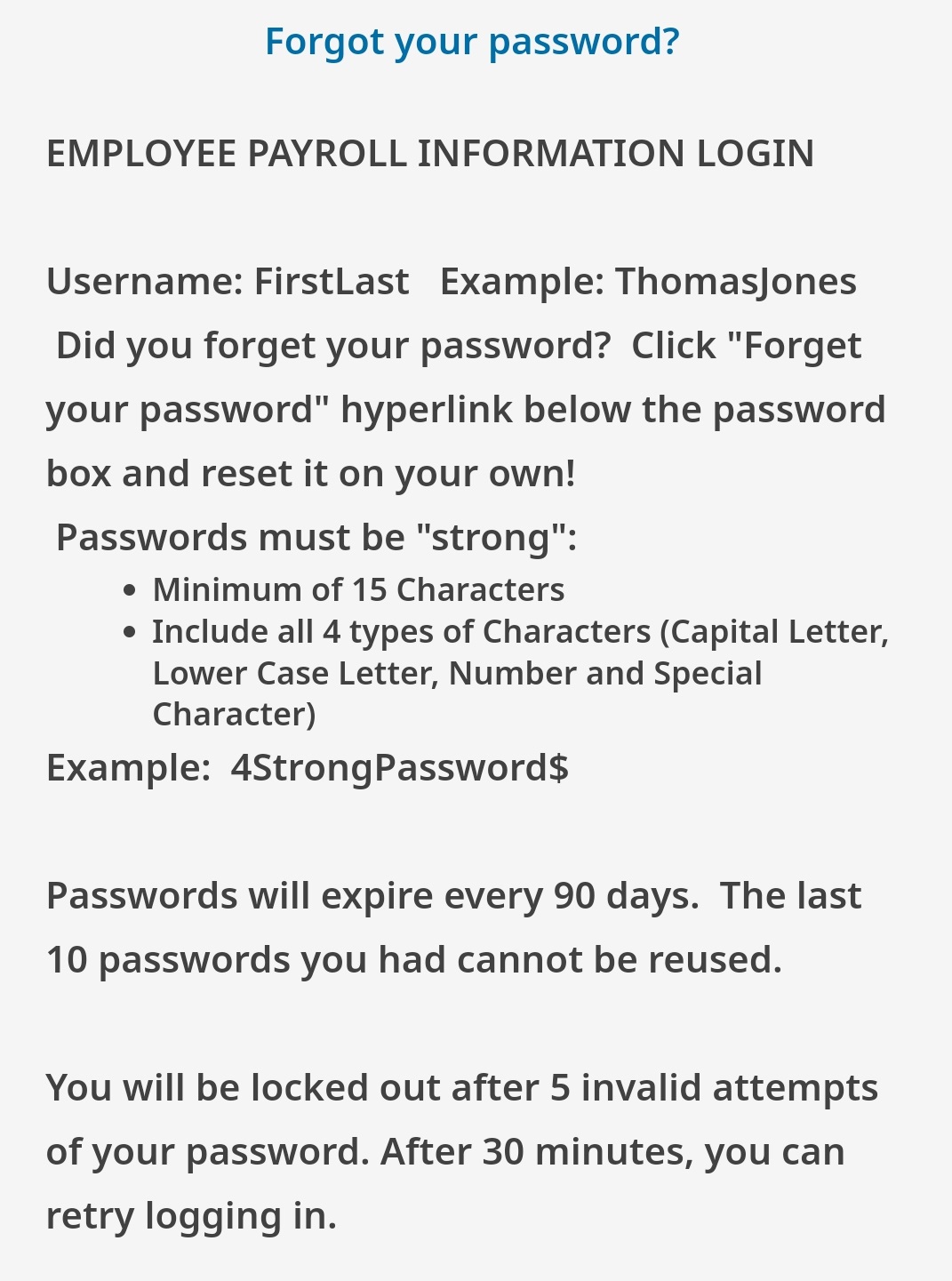
Locked out? Follow these steps, click here.
Still locked out? Submit a request, here.
Sign up for Electronic W2
Get your W-2 early after the new year by enrolling in electronic
delivery!
Click here to sign up .
Aldridge, Inc.
Wages
State
Earnings can include base wage, pooled cash tips, and carryout surcharges. Rates vary by shift and location; track your tips and review your pay information.
Briefly review the section at left
Then ask
Besides base wage, what can make up your total earnings?
Where would you check your actual pay and hours?
As a tipped employee, your total hourly earnings will typically range
from $16.00 to $20.00+ per hour, consisting of three components:
Base wage: $8.00–$12.00 per hour (varies by shift and location)
Daily cash tips (taken home at the end of each shift)
Carryout order surcharges (automatically applied and paid through your paycheck)
Shift-Based Wages
Base wages vary by shift, depending on typical tipping patterns. If you
work a different shift than usual, your base wage will reflect the shift
you are working — not your usual rate.
Example: If you're normally a second-shift employee but pick up a first
shift, you'll earn the first shift’s base wage for that day.
Shift Differentials, Multiple Pay Rates, and Overtime
Some employees earn different hourly rates in the same workweek due to
shift differentials (for example, working both 1st shift and a 2nd or
3rd shift in the same week).
When an employee works more than 40 hours in a workweek and has more than
one regular rate of pay, overtime is calculated using a blended
(average) rate, as required by federal law.
How overtime is calculated:
All straight-time earnings for the week are added together.
That total is divided by the total hours worked to determine the
average hourly rate.
Overtime is paid at one-half of that average rate for each overtime
hour (straight-time pay is already included).
This method ensures overtime pay fairly reflects all shifts worked during
the week.
Example:
30 hours at $10/hour (regular shift)
15 hours at $12/hour (shift differential)
Total hours worked: 45 (5 overtime hours)
Regular pay:
(30 × $10) + (15 × $12) = $480
Average hourly rate:
$480 ÷ 45 hours = $10.67
Tracking Your Earnings
To understand your true hourly earnings, we recommend the following:
Track your tips daily and total them weekly.
Each pay period (every two weeks), add your total cash tips and
divide by the hours worked to find your tip average per hour.
Add your tip average to your base wage and surcharge income to
calculate your total hourly rate.
Here are typical earnings examples (base wage + average tips and surcharges):
1st Shift: $8.00 + $10.00 = $18.00/hr
2nd Shift: $10.00 + $6.00 = $16.00/hr
3rd Shift: $10.00 + $10.00 = $20.00/hr
Additional Employee Benefits
We also offer:
50% daily employee meal discount
Uniform allowance
Annual paid vacation
Optional dental insurance
Comprehensive training program
Aldridge, Inc.
Reviews and Raises
Briefly review the section at left
Reviews
Reviews are conducted around your work anniversary to provide
feedback and discuss growth opportunities.
45-Day Preliminary Review: Provides initial feedback and considers
eligibility for a raise at the 3-month mark.
3-Month Review: If a raise is not granted, a follow-up review may be
scheduled after three additional months to support skill development.
Annual Review: Conducted on your work anniversary to assess progress
and future potential.
Raises
Raises are merit-based, reflecting performance, rule compliance, and
consistent effort. Key factors include:
Good attendance (this is critical).
Following company policies.
Maintaining uniform standards.
Completing shift duties and communicating effectively.
Poor attendance or rule violations will make you ineligible for a
raise, regardless of other contributions.
Early or Interim Raises
Exceptional performers or those with substantial, verifiable prior
experience may qualify for early or interim raises.
Aldridge, Inc.
Promotions and Advancement
Briefly review the section at left
We value ambition and hard work, and we're proud to offer exciting
opportunities for growth within the company. Positions available for
promotion include:
Trainer: Gain leadership experience and earn a bonus
for your expertise and dedication.
Assistant Manager: Take the next step in your
career with increased responsibilities and an extra
wage.
Manager: Achieve a leadership role with a competitive
wage or salary, additional benefits, and
the opportunity to shape the success of your team and the company.
If you're interested in advancing, we encourage you to take the next
step! Contact Tom Aldridge directly at (414) 271-5050, extension
103, or email toma@aldridgeinc.com
to discuss your goals and learn more about these opportunities.
Vacations
Briefly review the section at left
Our policy is to provide a paid vacation to all full time employees
subject to the following:
Eligibility: One week of vacation after one year;
two weeks after three years. Must be used within the following year -
no rollover or payout if unused.
Scheduling: Vacation Requests are submitted through
the online Time-Off Request system and should be made at least
30 days in advance. Paid vacation is taken in full
weeks. A first and second choice are required, and certain holiday
blackout dates apply.
Vacation Pay: Based on prior year's wages, paid
after returning to work. No carryover or payout if employment ends.
Early/Extra Vacation: Three or more consecutive days
away from normal availability are handled as a Vacation
Request, even when the dates cross two schedule weeks. Time
off that is not an eligible paid vacation must be pre-approved, is
unpaid, and may affect future vacation eligibility.
We are typically open 24 hours, 7 days per week, including all holidays.
We pay a bonus to server/cooks for working the following holidays:
New Years Day - 1st and 2nd shift
July 4 - 1st, 2nd, and 3rd shift
Thanksgiving - 1st, 2nd or 3rd shift
Christmas - 1st, 2nd and 3rd shift
New Years Eve - 3rd shift
Important Notes: 1. Requests for Days off or Vacations are
not accepted over Holidays. 2. An absence during the holiday weekend, Friday through Monday, disqualifies an employee from that holiday bonus, subject to the protected-leave review below. Being more than 10 minutes late for a qualifying holiday shift listed above also disqualifies the employee, subject to that review. Trainees are excluded from the Holiday Bonus. 3.
Depending on the store and the particular situation, janitors are not
typically scheduled on the day of these holidays.
Protected-leave review: Before withholding a holiday bonus because of an absence or tardiness, the office must review whether protected leave or another applicable legal requirement affects eligibility. Do not automatically deny the bonus for protected leave; apply the required treatment consistently with equivalent leave. Ask the office which Friday-through-Monday dates apply if the holiday-weekend dates are unclear.
Aldridge, Inc.
Group Benefits
Briefly review the section at left
We offer optional dental insurance after six months
of employment, click herefor information; also
optional disability and other supplemental
insurance products available through Colonial Life, click here for information.
A Few Words about Training
Aldridge, Inc.
Training
State
The separate one-on-one program covers five cook days and three server days. Stay with your trainer, ask when unsure, and give your best effort each day. Training hours worked are paid at $15 per hour.
Briefly review the section at left
Then ask
If your trainer asks you to do something you do not understand, what will you do?
When does participation in tips and surcharges begin?
We want you to succeed! To set you up for success, we provide
personalized, one-on-one training with a certified trainer. We carefully
construct a training plan of:
5 Cook Training Days (CTrn1, CTrn2, etc.)
3 Server Training Days (STrn1, STrn2, etc.)
Training typically begins with cook training. You will follow the exact
schedule and hours of your assigned trainer.
What to Expect
Bring a Pen: Have a pen with you every day. Take notes and
use them.
Stay With Your Trainer: Stay by your trainer’s side at all
times. Follow his or her exact instructions. Do not wander off or do
work you were not explicitly instructed to do. As you progress, your
trainer will gradually give you more latitude to work independently.
Daily Readings: Each day includes a small amount of reading
from training materials (details provided).
Your Role
Be Ready to Learn: Arrive on time, in uniform, and ready to
listen and learn.
Best Effort Required: You must work to the best of your
ability every day. This includes giving strong effort, staying
engaged, following directions, asking questions when unsure, and
making steady progress learning the job.
Daily Evaluation: Your progress is evaluated daily based on
learning, performance, effort, attitude, following instructions, and
readiness to work independently.
Training Is Performance-Based: Training is a trial period.
Continued employment depends on demonstrating that you can learn the
job, perform the work as trained, and consistently apply best effort.
Failure to Meet Expectations: If you are late, absent, not
listening, do not follow instructions, do not put forth your best
effort, or fail to meet training expectations (including learning the
job at an acceptable pace), your employment may be terminated during
training without warning or progressive discipline.
Compensation
Training is paid at $15.00 per hour. Trainees do not share in tips or surcharges; tips and surcharges begin the day training is complete.
If an employee fails to call or report for a scheduled training shift and abandons training, refer the case to the owner and payroll office for review. Confirm the circumstances before treating a missed shift as abandonment, including possible emergencies or protected absences. A missed shift followed by returning to training, or the company ending training, does not by itself meet this condition.
A $10.00 rate for training hours already worked but not yet paid may be applied only after the owner and payroll office confirm, with appropriate legal guidance, that this specific condition was provided in lawful advance written notice before the affected work and that applying it is permitted under applicable wage, overtime and final-pay requirements. Until those conditions are confirmed, pay the affected hours at $15.00 per hour.
Do not automatically reduce pay for an absence or a no-call/no-show. Training wages already paid will not be reduced. This review requirement does not authorize delaying legally required payment.
Final Goal
The goal is for you to work confidently and independently with minimal
supervision.
Encouragement
Press through the training! Don’t give up! It takes time to learn and
adjust. We’re excited to have you on the team. Welcome aboard, and good
luck!
Aldridge, Inc.
Separation of Employment
Briefly review the section at left
If you're considering leaving, we encourage you to first discuss your
concerns with the manager. If you do decide to resign, please provide at
least two weeks' notice to allow time for a replacement.
Employees who give two weeks' notice and have worked for at least six
months may qualify for up to $200 in severance pay
(prorated to 37.5 hours).
Management may choose to remove you from the schedule before your
specified last day.
Your final paycheck will be sent via direct deposit on the next
regular payday.
After leaving, we ask that you refrain from visiting the
restaurant for 30 days.
Rehire eligibility will depend on your conduct during employment
and the manner in which you resigned.


 Communicate
directly with your manager regarding schedules, shifts, or any issues.
Use text, phone, or in-person discussions to provide prompt and accurate
updates. Your manager oversees many employees. You are responsible for
managing yourself. Failing to communicate disrupts operations and
impacts the entire team. Your diligence is essential - stay responsible
and keep us informed.
Communicate
directly with your manager regarding schedules, shifts, or any issues.
Use text, phone, or in-person discussions to provide prompt and accurate
updates. Your manager oversees many employees. You are responsible for
managing yourself. Failing to communicate disrupts operations and
impacts the entire team. Your diligence is essential - stay responsible
and keep us informed.

 As you continue the job,
you will want to purchase additional uniform items. These are available
at your expense and can be conveniently paid for through paycheck
deductions at a rate of $1.00 per hour. A variety of options are
available which you can see by clicking on the image of the order form
presented here. Also, on the form are some George Webb branded outerwear
items (jacket, hoodie, and long-sleeve t-shirt). These George Webb branded items may be worn during a shift only in cold weather, with the hood kept down. All required uniform items must still be worn. Also available are George Webb branded t-shirts click here.
As you continue the job,
you will want to purchase additional uniform items. These are available
at your expense and can be conveniently paid for through paycheck
deductions at a rate of $1.00 per hour. A variety of options are
available which you can see by clicking on the image of the order form
presented here. Also, on the form are some George Webb branded outerwear
items (jacket, hoodie, and long-sleeve t-shirt). These George Webb branded items may be worn during a shift only in cold weather, with the hood kept down. All required uniform items must still be worn. Also available are George Webb branded t-shirts click here. 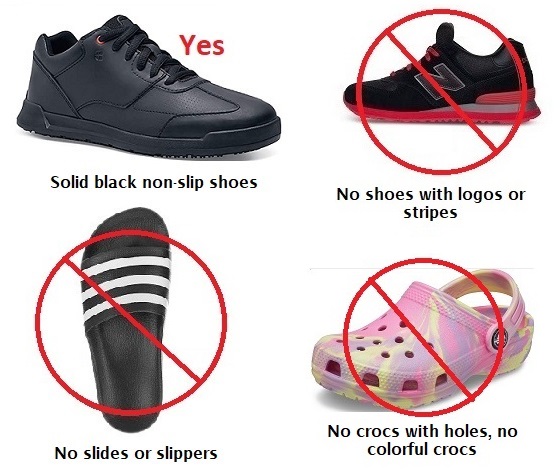 Mandatory are black
non-slip shoes.
Mandatory are black
non-slip shoes.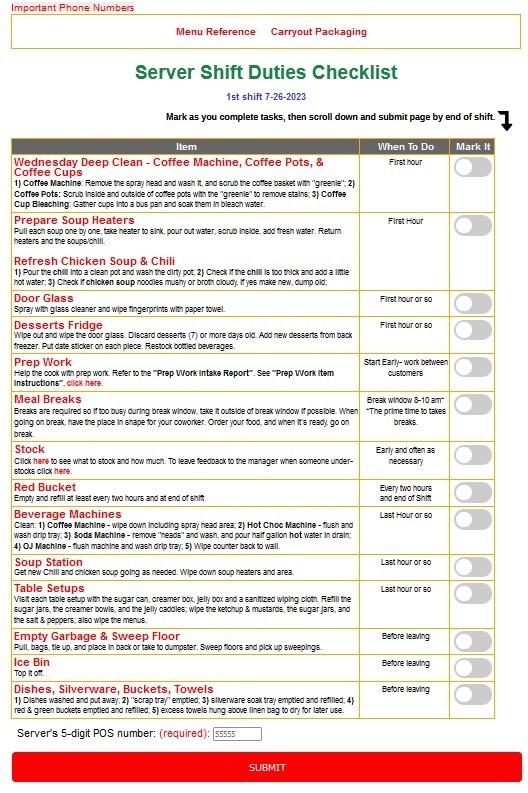
 Beverage
Breaks
Beverage
Breaks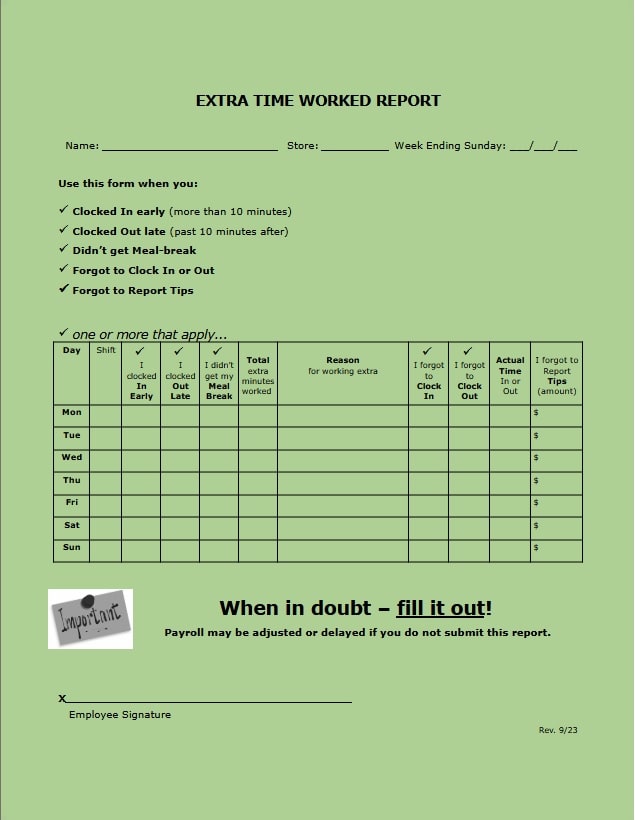
 Your first
pay day depends on when in the pay cycle you start the job. Click on the
chart here to determine when that will be →
Your first
pay day depends on when in the pay cycle you start the job. Click on the
chart here to determine when that will be → We pay by
direct deposit to your bank or pay card. If you have no bank or pay card
we will issue a free pay card, click
here.
We pay by
direct deposit to your bank or pay card. If you have no bank or pay card
we will issue a free pay card, click
here. 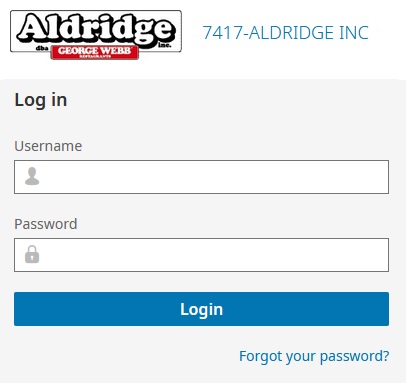 To access your Pay Stubs and Earnings Information
online:
To access your Pay Stubs and Earnings Information
online: