
 Who's
Supposed To Do More Dishes
Who's
Supposed To Do More Dishes
The cook or server?
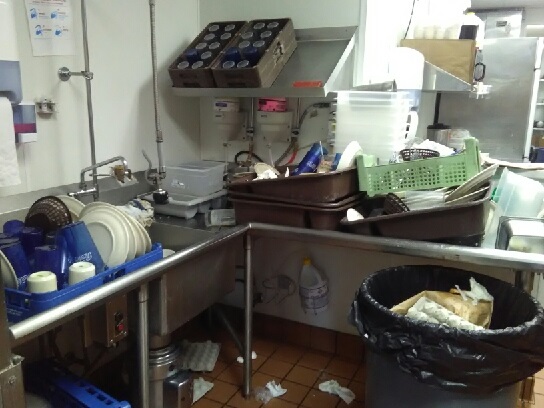
Roughly equal. Here's what realistically happens... The cook is closer to the dish machine so can do dishes while the server buses the tables. When the cook gets busy preparing groups of orders after the server takes the orders, that's a good time for the server to do some dishes. All-in-all, both should participate and work together.
Dish Procedures
1. Monitor Tables and Pre-Clear
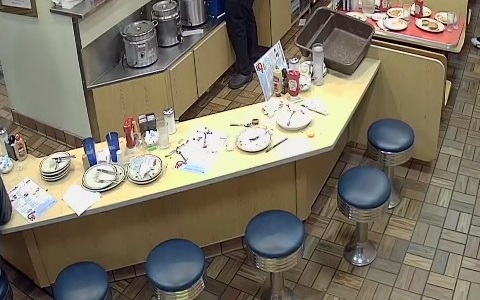 We monitor tables and pre-clear as customers finish their plate. That
way, the place doesn't look like a typhoon hit it with dirty dishes left
all over the place after a rush has ended. So regularly walk through the
dining area monitoring for customers who have finished their food.
Approach, offering to take their plate. Keep a bus pan handy, and place
the plate in it.
We monitor tables and pre-clear as customers finish their plate. That
way, the place doesn't look like a typhoon hit it with dirty dishes left
all over the place after a rush has ended. So regularly walk through the
dining area monitoring for customers who have finished their food.
Approach, offering to take their plate. Keep a bus pan handy, and place
the plate in it.
2. Final-Clear and Reset Table
 As
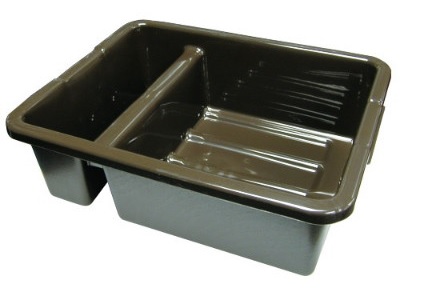
customers leave, final clear the table. Bring a bus pan to the
table. Remove all remaining dishes, cups, glasses, and silverware into
the bus pan. Put placemats and napkins into the garbage, not the bus
pan.
As
customers leave, final clear the table. Bring a bus pan to the
table. Remove all remaining dishes, cups, glasses, and silverware into
the bus pan. Put placemats and napkins into the garbage, not the bus
pan. 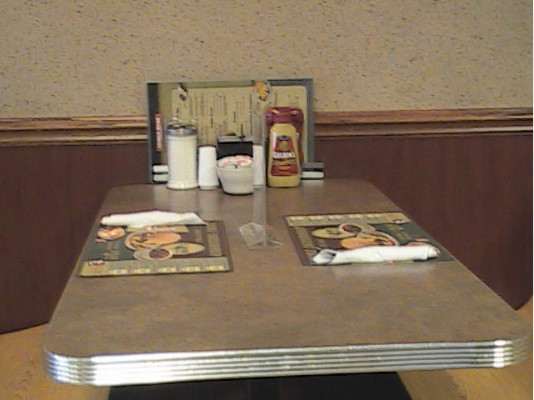 After having cleared the table, reset it as follows: a)
Grab a clean/sanitized terry towel from the red bucket (bucket explained
later), and wipe the table; b) Set the table with
placemat(s) and a table tent between the two placemats; c)
Organize the table setups (condiments) as depicted.
After having cleared the table, reset it as follows: a)
Grab a clean/sanitized terry towel from the red bucket (bucket explained
later), and wipe the table; b) Set the table with
placemat(s) and a table tent between the two placemats; c)
Organize the table setups (condiments) as depicted.
3. Bring Bus Pan to Dish Area to Sort, Rinse, Scrape, and Fill Dish Racks
Place the bus pan full of dishes to one side of the pre-rinse sink.
Place an empty dish rack to the other side of the pre-rinse sink. Grab
dishes one at a time. Scrape all food scraps into the pre-rinse
sink opening (the disposal side)*, then rinse the dish as
needed with the overhead sprayer. Scrub dishes with the overhead sprayer
brush to remove caked-on food such as egg yolk. Place dishes into the
dish rack. Cups and glasses go into overhead racks. Silverware goes into
the silverware soak tray. Paper and straws go into the garbage. Then
rinse the bus pan and return it to the area out front. *A key
rule is that food scraps from plates go into the pre-rinse sink and
into the garbage disposal (not into trash cans), to reduce odors and
to prevent attracting bugs and pests. 
4. Run the Dish Machine
Slide the rack into the dish machine and close the door. The machine will start automatically. The machine goes through a wash cycle and then a rinse cycle. The rinse cycle contains a pre-measured amount of sanitizer that sanitizes the dishes. When the machine stops, open the door and remove the rack from the other side of the machine. Allow the dishes to cool for a moment, before moving back to storage.
5. Washing Silverware
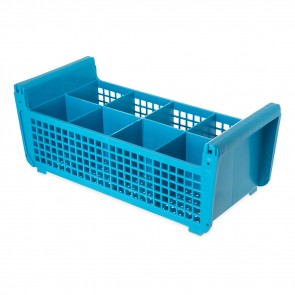 Allow the silverware to
soak in the silverware soak tray. As the tray becomes full, locate the
silverware basket as well as a flat dish rack. Place the dirty
silverware into the silverware basket and place it on the flat rack. Run
the machine. Refill the silverware soak tray from the dispenser on the
wall for that purpose.
Allow the silverware to
soak in the silverware soak tray. As the tray becomes full, locate the
silverware basket as well as a flat dish rack. Place the dirty
silverware into the silverware basket and place it on the flat rack. Run
the machine. Refill the silverware soak tray from the dispenser on the
wall for that purpose.
 6. Miscellaneous Items
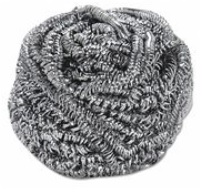
You will encounter miscellaneous items like measuring cups, tea pots, steak knives, soup pots, etc. Some pots that contained chili for example, will need to be soaked and then scrubbed with the metal scrubber before putting through the dish machine.
7. Return Dishes to Appropriate Storage Areas
When the dish machine is done running and you remove the rack from it, stack the clean dishes, then return them to appropriate areas in the kitchen and server areas. When running silverware, return the clean silverware to the clean silverware trays out front.
8. Empty and Refill Red and Green Bucket and Silverware Soak Tray
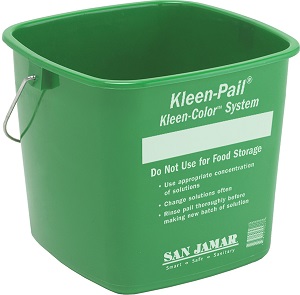
- Green Bucket at Dish Table: On the dirty side of the dish table, is a green bucket that is filled with warm water & soap from a dispenser on the wall near the bucket. The green bucket mixture is for washing out soiled terry cloth wiping towels. As the green bucket water gets cold or dirty, empty it and refill it from the hot water/soap dispenser.
-
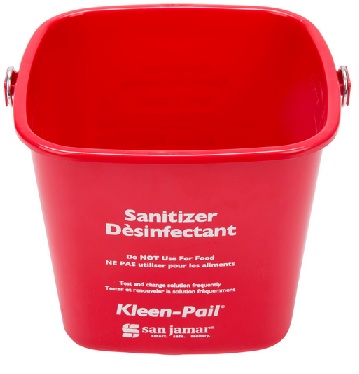 Red
Bucket at Dish Table: After swishing out a terry cloth towel in
the green bucket, sanitize it in the mixture in the red bucket. The
red bucket contains warm water and sanitizer mixed to the required
concentration. Not less than every two hours or as the red bucket
water gets cold or dirty, empty it and fill it from the dispenser.
Red
Bucket at Dish Table: After swishing out a terry cloth towel in
the green bucket, sanitize it in the mixture in the red bucket. The
red bucket contains warm water and sanitizer mixed to the required
concentration. Not less than every two hours or as the red bucket
water gets cold or dirty, empty it and fill it from the dispenser. - Red Bucket at Customer Counter: There is a second red bucket with the warm water/sanitizer mixture that is kept on the bottom shelf of the customer counter. Monitor this red bucket as well, emptying and refilling it every two hours or more as needed.
9. Food Scraps & Garbage Disposal Rule (Very Important)
Food scraps from customer plates must go into the garbage disposal, not into trash cans. This reduces odors and helps prevent attracting bugs and pests. Trash cans are for non-food waste only (paper, wrappers, plastic, straws, etc.). If you are unsure whether something should go into the disposal, ask the manager on duty.
10. Operating the Garbage Disposal
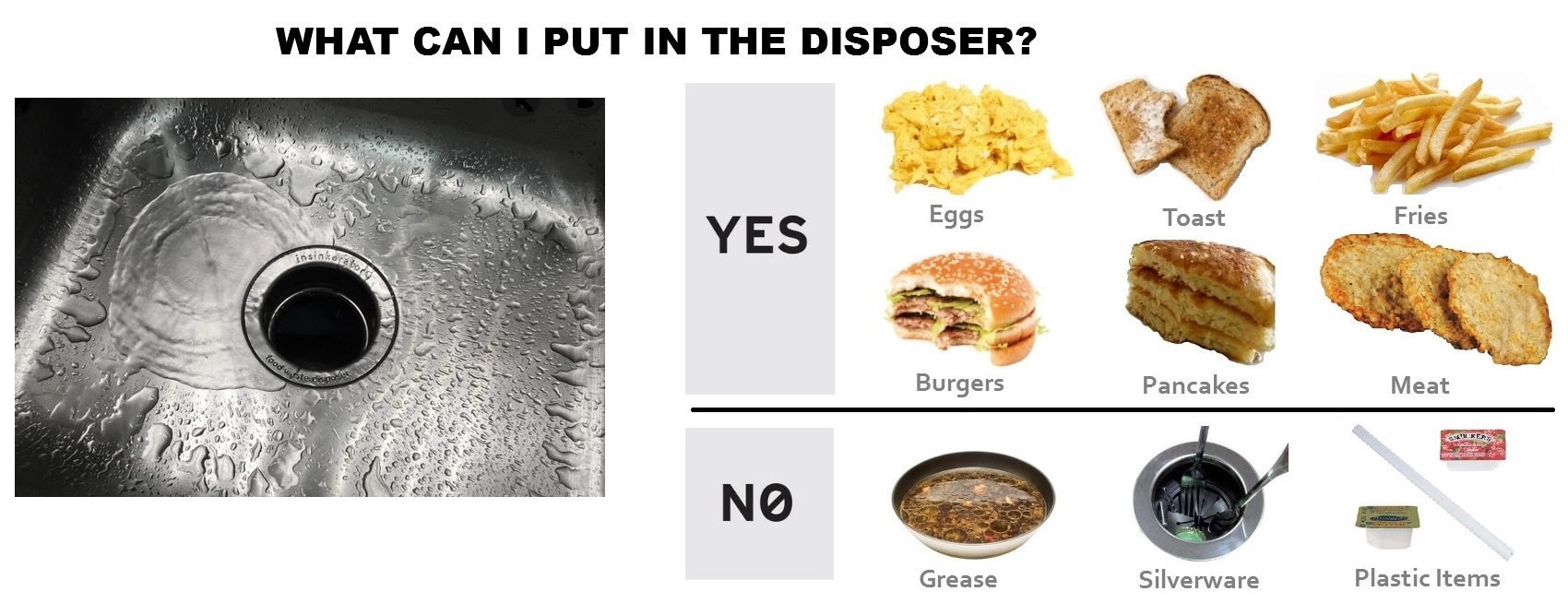 The pre-rinse sink has a garbage disposal. As you dump food scraps from
plates, and scrub and rinse the plates with the overhead sprayer, run
the disposal periodically so food does not build up in the sink.
The pre-rinse sink has a garbage disposal. As you dump food scraps from
plates, and scrub and rinse the plates with the overhead sprayer, run
the disposal periodically so food does not build up in the sink.
- Turn water on first: Use a steady flow of water while the disposal is running.
- Run disposal in short bursts: 3–5 seconds as needed while scraping/rinsing, and again at the end of a rush.
- Keep hands and tools clear: Never place your hand into the disposal opening.
- Prevent silverware accidents: Watch for forks, spoons, knives, ramekins, and small items. Do not allow any silverware to enter the disposal.
- If it jams or sounds wrong: Turn it off and notify the manager immediately. Do not keep forcing it.
11. Keep Dish Tables Cleared and Wiped Down
Connected to the dish machine, is a dirty side dish table on one side, and a clean side dish table. Clear the dirty side by washing the dishes. Clear the clean side by returning the clean dishes to storage. Wipe down both sides periodically, the dirty side with a wiping towel from the green bucket, the clean side with a sanitized wiping towel from the red bucket.
12. Empty Dish Machine Scrap Tray
There is a food scrap tray under the dish machine. Pull the tray at end of shift and empty the contents into the sink/disposal side as directed. Return the tray.
13. Chemicals
There are several chemicals in use. Monitor and refill if needed. For the dish machine, there are solid chemical containers on the top of the machine. Also for the dish machine, there is a bleach/sanitizer container located near the dish machine. It won't likely to go empty but be aware of it. There also is a wall-mounted container that feeds the red bucket dispenser. If this goes empty, get a new container as directed. (Be sure to save and reuse any special cap or adapter required for the dispenser.) There are solid chemical dispensers on the wall for the green bucket soap dispenser and another for the silverware soak tray dispenser.
14. Sweep the Kitchen and Dining Room
Another duty is to sweep up periodically. Monitor the floor in the kitchen and the dining area. As needed, locate the broom and dustpan. Sweep up and collect dirt in the dustpan. Empty the dust pan into the garbage.
15. Empty Garbage Containers
Towards the end of the shift, empty the garbage containers. There is one large container in the dish machine area, and smaller containers in the kitchen and server areas. When you empty the garbage bags, tie the bags and put them where the garbage is stored in the back room. Also get new garbage bags to replace the ones you emptied. Ask where those are kept.
Reminder: If an employee is unsure about any step, ask the manager on duty. These procedures are part of your training and are required.
Certification of Training
Please sign click here.